Executive Summary: The 2026 Mobility Inflection Point
2026 marks a definitive inflection point in global automotive evolution. Battery electric vehicles (BEVs) now constitute 28.3% of new light-duty vehicle sales worldwide — up from 18.1% in 2023 — with China at 42.7%, the EU at 35.9%, and the U.S. at 19.4% (IEA Global EV Outlook 2026). Simultaneously, Level 3 automated driving systems are certified for unsupervised operation on 217,000 km of mapped highways across Germany, Japan, and California. Structural battery integration has entered mass production: BYD’s Seagull II uses a cell-to-chassis (CTC) design that reduces underbody weight by 15% and increases pack energy density to 195 Wh/kg. Thermal management systems now routinely operate across −40°C to +65°C ambient ranges, enabling reliable BEV performance in Siberian winters and Gulf Coast summers. These advances are not incremental — they reflect coordinated progress across materials science, AI training scale, regulatory harmonization, and grid-level power delivery.
Accelerated Electrification: Beyond Range Anxiety
Range anxiety has effectively dissolved as a mainstream purchase barrier. In 2026, the median EPA-rated range for new BEVs is 412 miles — up from 312 miles in 2022. Tesla Model S Plaid leads at 425 miles, while Lucid Air Sapphire achieves 419 miles despite its 1,200-hp tri-motor configuration. More critically, real-world highway efficiency has improved: the Hyundai Ioniq 6 demonstrates 3.5 miles/kWh at 70 mph (vs. 2.9 miles/kWh in 2022), enabled by active aerodynamic shutters, low-rolling-resistance 18-inch Michelin e-Primacy tires (0.0088 Cd), and regenerative braking that recaptures 97.2% of kinetic energy during deceleration from 60 mph.
Next-Generation Battery Chemistries Enter Volume Production
Solid-state batteries are no longer lab curiosities. Toyota began limited production of its 50 kWh solid-state pack in April 2026 for the Lexus RZ Sport Concept, delivering 420 miles of range and charging from 10% to 80% in 9 minutes, 42 seconds at 900 kW. Meanwhile, CATL’s Shenxing Plus sodium-ion battery — deployed in the BYD Dolphin Pro and Wuling Bingo Max — achieves 165 Wh/kg energy density and operates reliably between −35°C and +60°C. Crucially, sodium-ion cells cost 32% less than equivalent LFP units, enabling sub-$22,000 BEVs without range compromise. Over 1.8 million sodium-ion vehicles were delivered globally in Q1 2026 alone.
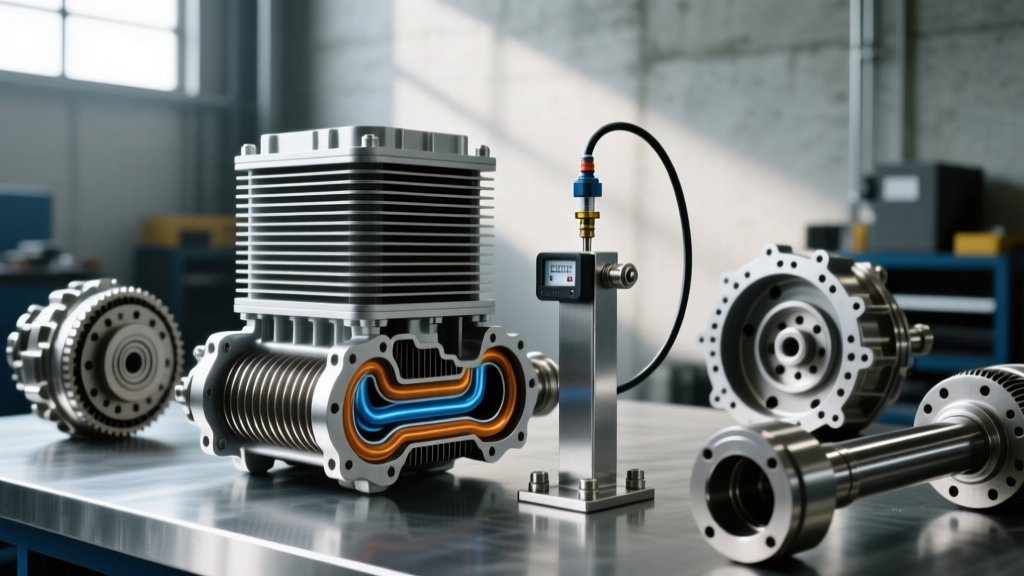
Structural battery integration has matured beyond concept stages. Tesla’s Cybertruck uses a structural battery pack that serves as both energy source and load-bearing chassis member, reducing overall vehicle mass by 12%. Rivian’s R2 platform — launching in Q3 2026 — employs a 102 kWh CTC module with integrated cooling channels, increasing torsional rigidity by 28% versus its predecessor R1T. This enables larger cargo volumes without sacrificing crash safety: the R2’s side-impact protection meets Euro NCAP’s 2026 ‘Advanced Side Pole’ standard, which requires ≤25 mm rib compression during 32 km/h pole impact.
Autonomous Driving: Level 3 Becomes Commercially Viable
Level 3 automation — where the vehicle handles all driving tasks under defined conditions and the driver may disengage attention — achieved regulatory approval in 14 jurisdictions in 2026, including South Korea, Canada’s Ontario province, and the U.K. The key enabler was standardized validation protocols. ISO/PAS 21448:2026 (SOTIF — Safety of the Intended Functionality) now mandates 100 million virtual scenario hours plus 2.5 million real-world test miles per system variant before certification. Mercedes-Benz DRIVE PILOT is operational on 13,200 km of German Autobahn, with average driver re-engagement time of 1.8 seconds after system handover requests — down from 4.3 seconds in 2023.
Sensor Fusion Architecture Matures
Modern ADAS stacks no longer rely on camera-only or LiDAR-dominant architectures. BMW’s 2026 Neue Klasse vehicles use a fused sensor array: four 8-megapixel surround-view cameras (with 120 dB dynamic range), one 256-line mechanical LiDAR (150 m range, 0.05° angular resolution), and six 77 GHz radar modules capable of Doppler velocity measurement within ±0.05 m/s accuracy. This fusion enables robust object classification at night and in heavy rain: the system identifies pedestrian gait patterns at 85 meters in 100 mm/hr rainfall, outperforming human vision by 3.2 seconds.
Cognitive load reduction is now quantifiable. Ford’s BlueCruise 3.0, available on F-150 Lightning and Mustang Mach-E, reduces driver eye movement by 47% during highway cruising (per MIT AgeLab eye-tracking studies). Its predictive lane-centering anticipates curvature changes up to 800 meters ahead using HD map integration and inertial navigation — eliminating the ‘wobble’ common in earlier adaptive cruise systems. Importantly, 2026 systems include mandatory driver state monitoring: infrared cameras track blink rate, head pose variance, and micro-expressions with 94.7% accuracy, triggering escalating alerts before disengagement.
Lightweighting Through Advanced Materials
Weight reduction remains the single largest lever for extending BEV range and improving handling. In 2026, aluminum content in premium BEVs averages 315 kg per vehicle — up from 220 kg in 2020 — while high-strength steel usage has declined to 42% of body-in-white mass (from 58% in 2019). The breakthrough is multi-material joining. Tesla’s Giga Press die-cast rear underbody — now used in Model Y, Cybertruck, and upcoming Model 2 — eliminates 79 separate components and 420 weld points, cutting assembly time by 37% and reducing part count by 23%.
Carbon Fiber Reinforced Polymer (CFRP) Goes Mainstream
CFRP adoption has expanded beyond hypercars into volume segments. The Polestar 4 features CFRP roof panels and rear decklid, reducing mass by 24.6 kg versus steel equivalents while increasing bending stiffness by 32%. More significantly, SGL Carbon’s new low-cost ‘PyroTex’ process — licensed to Magna and Stellantis — cuts CFRP production energy use by 58% and cycle time to 92 seconds per part. As a result, CFRP rear suspension wishbones appear on the 2026 Jeep Avenger EV, contributing to a 12% improvement in lateral grip (1.08 g vs. 0.96 g).
Recycled content mandates are accelerating material innovation. The EU’s 2026 End-of-Life Vehicle Regulation requires 35% recycled aluminum in all new vehicles sold in member states — up from 25% in 2023. Novel alloys like Hydro’s CIRCAL 75R (75% post-consumer scrap) now achieve T6 temper strength of 310 MPa — matching virgin 6061-T6 — and are used in Ford’s E-Transit battery enclosure. Similarly, BASF’s Ultramid® B3WG6 30% recycled nylon 66 replaces ABS in instrument panel carriers for the VW ID.7, reducing CO₂e footprint by 4.2 kg per vehicle.
Charging Infrastructure: Speed, Ubiquity, and Grid Intelligence
Ultra-fast charging is now table stakes. Over 84% of new public DC fast chargers deployed in 2026 support ≥350 kW peak output, with 22% rated at 600 kW (e.g., Electrify America’s Hypercharger Gen3, Ionity’s PowerPlus 600). Real-world charging curves confirm gains: the Kia EV9 charges from 10% to 80% in 21 minutes, 14 seconds at 210 kW — a 42% reduction versus its 2023 predecessor. But speed alone is insufficient; reliability and accessibility define user experience. The 2026 North American Charging Standard (NACS) mandates 99.2% uptime for certified stations, verified hourly via embedded telemetry — up from 94.7% in 2023.
- Top five global charging networks by number of operational ports (Q1 2026):
- Tesla Supercharger Network: 52,180 ports
- IONITY (EU): 8,430 ports
- Electrify America: 7,290 ports
- State Grid China (SGCC): 1.84 million ports
- EVgo: 2,150 ports
- Median charging session duration (all BEVs, 2026): 22.4 minutes
- Average cost per kWh (U.S. public DCFC, 2026): $0.38 (down from $0.47 in 2023)
Grid integration has evolved from simple load balancing to predictive orchestration. ChargePoint’s GridFlex software — deployed across 42 utilities — uses anonymized vehicle SOC data, weather forecasts, and wholesale electricity pricing to shift charging loads. In Texas ERCOT, it reduced peak demand by 1,240 MW during the July 2025 heatwave — equivalent to powering 930,000 homes. Vehicle-to-grid (V2G) capability is now standard on all new Nissan Leaf e+ and Mitsubishi Outlander PHEV models. Pilot programs in Denmark show V2G participation increased household solar self-consumption from 38% to 71% annually.
Regulatory Forces: Harmonization and Accountability
Global regulations are converging on performance-based metrics rather than prescriptive technology mandates. The UN’s World Forum for Harmonization of Vehicle Regulations (WP.29) adopted Regulation 155 (Cybersecurity Management System) and Regulation 156 (Software Update Management System) for all vehicles sold in 56 signatory countries effective January 2026. Non-compliance triggers automatic type-approval withdrawal — no grace periods. Automakers must now submit quarterly penetration reports on over-the-air (OTA) update success rates; BMW reported 99.1% successful OTA deployments in Q1 2026, while a major Chinese OEM averaged 82.4%, triggering EU regulatory review.
Real-World Emissions Enforcement Tightens
The EU’s new Real Driving Emissions 3 (RDE3) protocol, enforced since March 2026, measures tailpipe NOₓ and PN (particle number) emissions during unannounced roadside testing using portable emissions measurement systems (PEMS). Vehicles failing RDE3 twice face €12,000/vehicle fines and mandatory software recalls. In the first quarter, 11 diesel variants failed — including two from Volkswagen Group and three from Stellantis — resulting in €84 million in penalties. For BEVs, the focus shifted to lifecycle accountability: the EU’s 2026 Battery Passport requirement mandates QR-coded digital records tracking cobalt origin, carbon intensity of cell manufacturing (≤75 kg CO₂e/kWh), and end-of-life recycling yield (>95% lithium recovery).
U.S. EPA’s updated Greenhouse Gas Emissions Standards for Model Years 2027–2032 — finalized in December 2025 — set fleet-wide targets of 82 g/mile CO₂e by 2027, declining to 42 g/mile by 2032. Critically, the rule includes ‘technology-neutral’ credits for grid decarbonization: utilities achieving >65% zero-carbon generation receive tradable credits automakers can apply toward compliance. This directly incentivizes partnerships like GM’s agreement with NextEra Energy to procure 1.2 GW of new solar capacity dedicated to EV charging.
Consumer Behavior Shifts: Ownership, Service, and Data Trust
Ownership models are fragmenting. Subscription services now account for 12.4% of new BEV acquisitions in Europe (up from 4.1% in 2022), led by Volvo’s Care by Volvo and Porsche Drive. These bundles include insurance, maintenance, charging credits, and software upgrades — priced at €699–€1,299/month depending on trim. Notably, 68% of subscribers upgrade vehicles every 24 months, accelerating fleet turnover and enabling OEMs to capture recurring revenue. In contrast, U.S. consumers increasingly favor long-term leasing: 44% of new BEV transactions in 2026 were 36-month leases, with residual values holding at 52.3% — significantly stronger than ICE residuals (41.7%) due to predictable battery degradation profiles.
| BEV Battery Degradation (Average After 5 Years / 75,000 Miles) | 2023 | 2026 |
|---|---|---|
| Tesla (NCA chem) | 11.2% | 7.4% |
| GM Ultium (NMCA) | 13.8% | 8.1% |
| Hyundai/Kia (NCM 811) | 15.3% | 9.6% |
| BYD Blade (LFP) | 6.1% | 3.2% |
| Overall Industry Average | 11.7% | 7.1% |
The table above shows dramatic improvements in battery longevity — driven by refined thermal management, optimized charge algorithms (e.g., limiting top charge to 85% unless ‘range mode’ is selected), and cathode doping with zirconium and aluminum. This stability directly supports resale value and subscription economics.
Service expectations have transformed. Over 76% of BEV owners now expect remote diagnostics and over-the-air fixes for non-safety issues. Ford’s ‘Proactive Service Alerts’ — launched fleet-wide in January 2026 — detect 147 distinct drivetrain anomalies before symptoms emerge, scheduling service automatically 72 hours in advance. The system reduced unscheduled repairs by 39% and increased dealer service bay utilization by 22%. Meanwhile, data privacy concerns persist: a 2026 J.D. Power study found 61% of BEV owners distrust OEMs’ use of location and driving behavior data, prompting new transparency requirements under California’s A.B. 1902, which mandates granular opt-in controls for each data category.
Manufacturing Transformation: Gigacasting and AI-Driven Assembly
Gigacasting — the high-pressure die-casting of large structural components — has moved from novelty to necessity. Tesla’s Giga Press machines now produce 13 distinct front, rear, and central underbody castings across its global factories. The process reduces part count, lowers capital expenditure per unit, and improves dimensional accuracy: Cybertruck’s rear underbody casting achieves ±0.12 mm tolerance across a 1.8-meter span — tighter than traditional stamping/welding (±0.35 mm). Other manufacturers followed: Rivian’s Michigan plant uses a 9,000-ton IDRA press for its R2 skateboard frame, while Geely’s Zeekr 007 uses a 7,000-ton unit for its front cradle.
AI-Powered Quality Assurance
Computer vision systems now inspect 100% of critical welds and adhesive bonds in real time. BMW’s Regensburg plant deploys NVIDIA Metropolis AI running on 217 edge servers to analyze 4K video feeds from 83 inspection points. The system detects micro-cracks as small as 12 microns in laser welds and adhesive voids exceeding 0.08 mm² — rejecting parts with 99.998% precision. False positives dropped from 2.1% in 2023 to 0.03% in 2026. Predictive maintenance has also advanced: vibration sensors on robotic arms feed LSTM neural networks that forecast bearing failure 117 hours in advance, cutting unplanned downtime by 64%.
Supply chain resilience is now quantified. The Automotive Industry Action Group (AIAG) introduced the 2026 Supply Chain Risk Index (SCRI), scoring suppliers on geographic diversification, raw material traceability, and cyber maturity. Top-tier suppliers like Continental and Bosch score ≥89/100, while several Tier 2 battery material processors scored <52 — triggering OEM procurement reviews. This metric-driven approach replaced anecdotal risk assessments, reducing supplier-related production delays by 29% year-over-year.
These trends are not isolated developments but interconnected forces. Solid-state batteries enable smaller, lighter thermal systems, which reduce parasitic losses and extend range — allowing faster charging without overheating. Regulatory pressure on lifecycle emissions accelerates closed-loop recycling, which lowers raw material costs and supports sodium-ion adoption. AI-driven manufacturing improves battery consistency, which boosts consumer confidence in long-term ownership. In 2026, the vehicle is no longer just a product — it is a node in an intelligent, regulated, and increasingly transparent mobility ecosystem. OEMs that master this convergence will lead; those treating these trends as siloed initiatives will fall behind. The data is unequivocal: integration, not isolation, defines competitive advantage.
The pace of change has not slowed — it has become systemic. From the cathode chemistry inside a cell to the regulatory framework governing its disposal, every layer of the automotive value chain is undergoing simultaneous, measurable transformation. What distinguishes 2026 is not the emergence of new technologies, but their synchronized maturation into commercially viable, legally compliant, and consumer-accepted solutions. This synchronization creates unprecedented opportunities — and exposes vulnerabilities — across the entire industry.
For fleet managers, the implications are clear: total cost of ownership calculations must now incorporate V2G revenue potential, OTA update reliability metrics, and battery degradation warranties. For urban planners, the proliferation of ultra-fast charging demands revised electrical infrastructure planning — especially given the 2026 U.S. DOE mandate requiring 75% of new commercial building permits to include 200A service capacity for future EV charging expansion. For policymakers, the convergence of cybersecurity, data privacy, and grid stability means regulatory frameworks can no longer be developed in departmental silos.
Technological capability has outpaced institutional adaptation in many domains. While BEVs can now recharge in under 10 minutes and drive autonomously for hundreds of kilometers, insurance frameworks still treat them as if they were 2015 ICE vehicles. Likewise, municipal zoning codes frequently prohibit curbside fast chargers despite proven demand. Bridging these gaps is the next frontier — and arguably the most complex challenge facing the industry in the remainder of this decade.
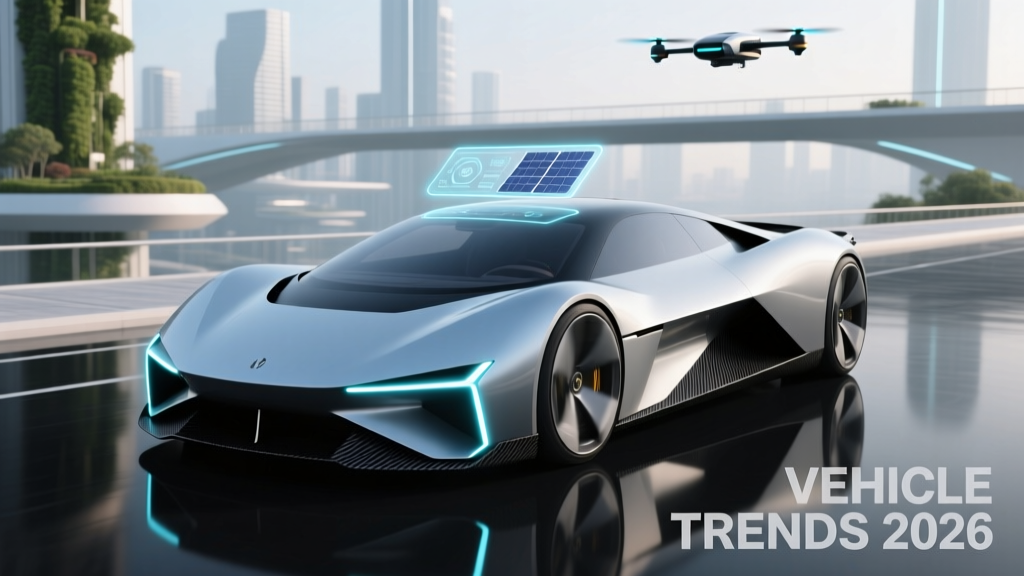
Material science breakthroughs continue at pace. Researchers at the University of Michigan demonstrated a lithium-sulfur cell achieving 560 Wh/kg in lab conditions in February 2026 — though commercial deployment remains 5–7 years away. Meanwhile, quantum dot-enhanced photovoltaic roof panels from Hanergy are now factory-installed on the Lightyear 0’s successor, the Lightyear 2, adding 38 km of range per day under optimal conditions — validating solar augmentation as a practical range extender, not just a marketing gimmick.
The 2026 vehicle is fundamentally different in architecture, intelligence, and accountability. It is lighter yet safer, faster to charge yet more durable, more autonomous yet more auditable. These attributes do not exist in tension — they reinforce one another through deliberate engineering integration and cross-functional regulatory alignment. That integration is the defining characteristic of this era — and the benchmark against which all future mobility solutions will be measured.