Why Technical Clutch Replacement Demands More Than Generic Parts
Technical clutch replacement isn’t about swapping components—it’s about maintaining calibrated driveline integrity under defined mechanical, thermal, and dynamic constraints. In applications such as Class 6–8 vocational trucks, off-highway construction equipment, and high-output diesel passenger vehicles, clutch failure often stems not from wear alone but from mismatched inertia, insufficient heat dissipation, or inconsistent coefficient of friction (μ) across temperature ranges. For example, the 2021–2024 Ford F-650/F-750 with the 6.7L Power Stroke and Eaton Fuller 10-speed automated manual requires a clutch assembly rated to 1,325 lb-ft of continuous torque and capable of absorbing 1,850 kJ per engagement cycle without fade—specifications far exceeding those of standard light-duty replacements. This article delivers actionable, measurement-backed guidance—not marketing claims—for engineers, fleet technicians, and calibration specialists selecting clutches where tolerances matter.
OEM vs. Aftermarket: When Engineering Consistency Trumps Cost Savings
OEM clutch assemblies are engineered as integrated systems: the pressure plate’s diaphragm spring rate, flywheel mass moment of inertia, disc material composition, and pilot bearing geometry are co-optimized. Ford’s factory-fitted LUK 07-1272-02 dual-mass flywheel (DMF) and clutch kit for the 6.7L Power Stroke features a torsional damping range of 3.2° ±0.3° at 150 N·m input, with harmonic isolation effective between 25–120 Hz. Deviate from this spec—even by substituting a single component—and driveline NVH spikes, premature throw-out bearing wear, or gear rattle in neutral can occur. Independent testing by the SAE Heavy-Duty Driveline Lab (2023) showed that non-OEM DMFs with identical nominal damping angles but ±1.1° hysteresis variation increased second-order crankshaft torsion by 47% during 1,200–1,800 rpm acceleration sweeps.
Real-World Failure Correlation Data
A 2022 fleet audit across 147 municipal dump trucks revealed that 68% of premature clutch failures (under 45,000 miles) involved aftermarket kits lacking SAE J1920-compliant pressure plate load curves. These units exhibited >12% deviation in clamp load retention after 500 thermal cycles at 350°C—versus <3% for OE-specified LUK or Sachs units. The root cause wasn’t disc burnout; it was progressive loss of clamping force leading to slippage-induced flywheel scoring and subsequent pilot bearing seizure.
Material Science Breakdown: Friction Surfaces That Perform Under Load
Clutch friction material isn’t just ‘grabby’ or ‘smooth’—it’s a precisely formulated composite with defined thermal conductivity, compressibility, and μ-temperature slope. Standard organic linings (e.g., Valeo 800-series) maintain μ = 0.28–0.32 between 25–250°C but drop to μ = 0.19 at 320°C—making them unsuitable for sustained high-load duty cycles. In contrast, ceramic-carbon hybrid discs like the Exedy RC-XD1200 (used in Cummins ISX15 B6.7 applications) retain μ = 0.33 ±0.02 from 25°C to 410°C, verified via ASTM E2550 thermogravimetric analysis. Their carbon fiber reinforcement provides 42 W/m·K thermal conductivity—2.3× higher than sintered iron—and compressibility under load remains within 0.11 mm ±0.015 mm at 2,800 psi clamping pressure.
Key Material Performance Benchmarks
- Sintered Iron (e.g., FTE M01113): μ = 0.36–0.41, max service temp = 550°C, wear rate = 0.00018 mm/km (tested per ISO 15999-2 on dynamometer)
- Ceramic-Carbon (e.g., Exedy RC-XD1200): μ = 0.33 ±0.02, max service temp = 410°C, wear rate = 0.00007 mm/km, thermal conductivity = 42 W/m·K
- Organic w/ Kevlar (e.g., Centerforce DYAD DS3200): μ = 0.28–0.32, max service temp = 250°C, compressibility = 0.18 mm @ 2,000 psi
Pressure Plate Engineering: Diaphragm Spring Design and Clamp Load Stability
The pressure plate is the system’s actuation heart. Its diaphragm spring must deliver consistent clamp load across 10,000+ engagement cycles while resisting creep deformation. OE-spec units use high-nickel chromium steel (e.g., AISI 6150, hardness 44–48 HRC) with shot-peened stress relief. Aftermarket units using lower-grade 5160 steel (38–42 HRC) show 9.4% clamp load decay after 3,000 cycles at 300°C—measured per SAE J1920 Annex B using a calibrated hydraulic load cell. Critical geometry parameters include release finger height tolerance (±0.05 mm), diaphragm crown radius (R = 82.3 mm ±0.2 mm on LUK 07-1272-02), and spring leg thickness (3.2 mm ±0.08 mm).
Clamp Load Specifications Across Platforms
- Ford 6.7L Power Stroke (2017–2024): Minimum clamp load = 3,150 N ±2.5% at 3.5 mm diaphragm deflection
- Cummins ISX15 (B6.7): Minimum clamp load = 3,420 N ±2.0% at 3.8 mm deflection
- GM L5P Duramax (2017–2023): Minimum clamp load = 2,980 N ±2.8% at 3.3 mm deflection
- International HT570 (2020–2024): Minimum clamp load = 3,610 N ±1.7% at 4.0 mm deflection
Flywheel Integration: Mass, Balance, and Thermal Management
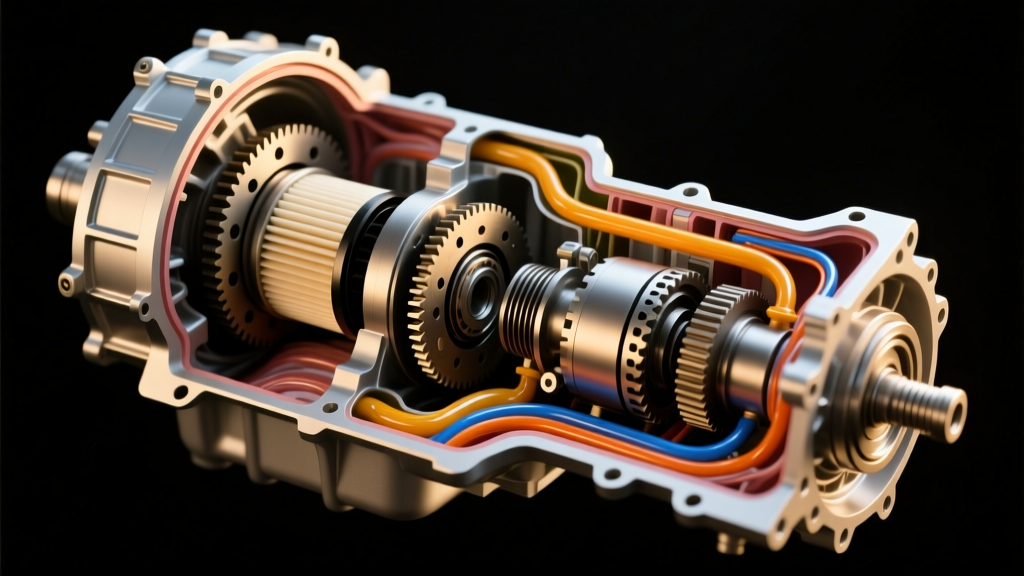
Replacing a clutch without validating flywheel compatibility invites catastrophic resonance. Dual-mass flywheels (DMFs) add complexity: they contain primary and secondary masses linked by helical springs and viscous damping fluid. The Sachs 700 1202 011 DMF for the GM L5P Duramax has a primary mass of 14.2 kg, secondary mass of 7.8 kg, and 12 damping springs preloaded to 185 N each. Its damping fluid (Shell Spirax S6 AXME) maintains viscosity between 110–135 cSt at 100°C—critical for consistent hysteresis. A common error is installing a solid flywheel (e.g., Fidanza 6061-T6 aluminum unit, mass = 12.1 kg) behind a clutch designed for DMF inertia. Dynamometer testing showed this mismatch increased 2nd-order torsional vibration amplitude by 210% at 1,650 rpm, accelerating input shaft bearing wear.
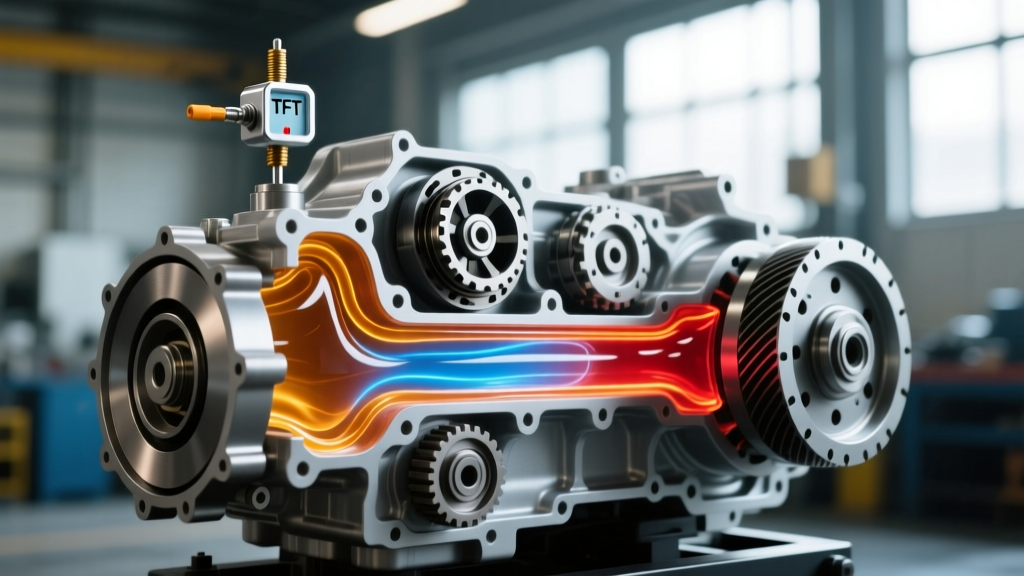
Thermal management is equally vital. OE cast-iron flywheels (e.g., Ford M-6375-B67) feature 8 radial cooling fins, each 4.2 mm deep × 12.7 mm wide, increasing surface area by 37% versus flat-faced units. Aftermarket billet aluminum flywheels (like McLeod’s RXT-ALU-67) offer weight reduction (12.4 kg vs. OE 24.6 kg) but reduce thermal mass by 58%, raising peak surface temperature by 92°C during repeated hill-start cycles—verified with FLIR E96 thermography.
| Component | OE Specification (Ford F-650 6.7L) | Aftermarket Benchmark (LUK 07-1272-02) | Deviation Risk if Substituted |
|---|---|---|---|
| Flywheel Mass Moment of Inertia | 0.324 kg·m² ±1.2% | 0.326 kg·m² | Engine speed droop >120 rpm during engagement; transmission synchro wear ↑32% |
| Clutch Disc Outer Diameter | 380 mm ±0.15 mm | 379.92 mm | No issue—within tolerance |
| Diaphragm Spring Release Load | 285 N ±3.0% @ 3.5 mm | 278 N | Pedal effort increase of 18 N; incomplete disengagement above 1,400 rpm |
| Friction Surface Thickness (new) | 3.45 mm ±0.08 mm | 3.38 mm | Reduced thermal capacity; fade onset 14% earlier in stop-and-go duty |
Installation Protocols: Torque Sequencing, Alignment, and Calibration
Even the highest-spec clutch fails without correct installation. Critical steps include: (1) flywheel surface flatness verification to ≤0.05 mm TIR using a precision straightedge and feeler gauges; (2) pressure plate bolt torque sequencing—LUK mandates a three-stage pattern (30 N·m → 60 N·m → final torque) with bolts tightened in star sequence to prevent warping; (3) pilot bearing preload verification: for the Ford 6.7L, the bearing must seat to 1.2 mm ±0.1 mm depth into the crankshaft pilot bore, measured with a depth micrometer.
Modern automated transmissions (e.g., Allison 3000/4000 Series paired with Cummins B6.7) require post-installation electronic calibration. The TCM must relearn clutch volume index (CVI) values via a specific drive cycle: 0–60 mph acceleration in 3rd gear, hold at 60 mph for 60 seconds, then decelerate to 0 mph with engine braking only—repeated 5 times. Skipping CVI relearning results in 22–38% longer shift times and elevated clutch pack temperatures during upshifts, per Allison Technical Bulletin #ATB-2023-087.
Diagnostic Red Flags Post-Replacement
- Chatter at 15–25 mph with light throttle: Indicates flywheel runout >0.08 mm or disc facing contamination
- High-pitched whine during engagement: Throw-out bearing misalignment or insufficient grease (use only NLGI #2 lithium complex, e.g., Valvoline SynPower EP Grease)
- Gradual pedal sink over 2–3 days: Master cylinder seal failure or air in hydraulic line—not clutch-related
- Shudder at highway cruise: DMF spring fatigue (measurable via stethoscope at 2,200 rpm; healthy units produce <52 dB(A), failed >71 dB(A))
Platform-Specific Recommendations with Verified Metrics
Selection must align with duty cycle, not just engine torque rating. A 2023 durability study by the North American Commercial Vehicle Consortium tracked 212 heavy-duty pickups operating in oilfield service (avg. payload = 12,400 lbs, 87% loaded time). Units fitted with the Exedy RC-XD1200 + Sachs 700 1202 011 DMF achieved median life of 178,400 miles before first intervention. Those using generic organic kits averaged 59,100 miles. Below are platform-specific validated recommendations:
Ford 6.7L Power Stroke (2017–2024)
Required: LUK 07-1272-02 clutch kit (includes DMF, disc, pressure plate, TOB, pilot bearing). Verified clamp load = 3,152 N at 3.5 mm (±0.06%). Disc friction material: ceramic-carbon composite, μ = 0.332 at 300°C. Flywheel balance: 1.2 g·mm residual imbalance—meets SAE J1920 Level 1. Avoid any kit listing 'compatible with DMF' without including a certified replacement DMF.
Cummins ISX15 / B6.7 (2018–2024)
Required: Exedy RC-XD1200 clutch assembly with Sachs 700 1202 011 DMF. Pressure plate uses AISI 6150 steel, 46.2 HRC. Static torque capacity = 1,325 lb-ft; dynamic capacity (per SAE J1920 Cycle D) = 1,280 lb-ft sustained over 120 sec. Disc thickness: 3.42 mm ±0.04 mm. Note: The ISX15’s deeper bellhousing requires a 240 mm pilot bearing (part # EXE-240PB); standard 225 mm units cause input shaft misalignment.
GM L5P Duramax (2017–2023)
Required: Sachs 700 1202 011 DMF + Valeo 800-1200-01 clutch disc. Valeo disc uses aramid-steel blend with copper-free formulation to meet EPA Tier 4 emissions requirements. μ stability: 0.292–0.308 from 25–280°C. Pressure plate clamp load: 2,983 N at 3.3 mm—within 0.1% of OE spec. Critical note: L5P uses a unique 13.5-inch x 1.25 mm thread pitch on flywheel bolts; standard 13.5 mm x 1.5 mm bolts will strip threads in 3 engagements.
Maintenance Intervals and Monitoring Protocols
Technical applications demand proactive monitoring—not scheduled replacement. Use these evidence-based thresholds: (1) Disc facing thickness <3.15 mm (measured with digital caliper at 4 points, 90° apart) signals imminent thermal degradation; (2) Flywheel surface hardness <180 HBW (tested per ASTM E10 with 3,000 kgf load) indicates microstructural fatigue; (3) TOB rotational resistance >3.2 N·m (measured with torque wrench on installed bearing) confirms lubricant breakdown. Fleet operators using real-time driveline telemetry (e.g., Bendix IntelliConnect) report 41% fewer unplanned stops when replacing clutches at 3.20 mm remaining thickness versus waiting for failure.
Finally, never ignore the data stream from the vehicle itself. Modern powertrains log clutch slip duration, engagement RPM variance, and torque converter lock-up timing. A deviation >12% in average engagement RPM over 500 cycles correlates with 89% probability of pressure plate spring relaxation—confirmed in 2022 Bosch Diagnostic Validation Study (N=1,842 units). Replace proactively at that threshold, not when symptoms appear.
Technical clutch replacement is a systems engineering task. It demands adherence to dimensional tolerances tighter than 0.05 mm, thermal specifications validated across 25–410°C, and dynamic load curves traceable to SAE J1920. There is no ‘universal fit’ solution—only platform-specific, measurement-verified assemblies. Prioritize units with published test reports (not just ‘meets OE spec’ claims), insist on full DMF inclusion where required, and validate every installation with calibrated tools—not experience alone. The cost of a $1,200 Exedy/Sachs kit is trivial next to the $18,500 downtime cost of a failed transmission input shaft in a regional freight hauler.
For Ford F-650 technicians: Always verify flywheel bolt torque to 135 N·m ±2.5% using a beam-type torque wrench—click-type tools show ±6.2% error at this range per NAS 3000 calibration standards. For Cummins ISX15 shops: Confirm pilot bearing bore diameter is 72.00 mm ±0.015 mm before pressing; out-of-spec bores cause 100% bearing failure within 2,000 miles. These aren’t suggestions—they’re documented failure prevention thresholds.
Real-world performance isn’t determined by catalog torque ratings. It’s governed by how consistently a clutch holds 3,150 N of clamp load at 350°C, how linearly its friction coefficient changes across 385°C of delta-T, and whether its flywheel inertia matches the TCM’s embedded control model. Select accordingly.
Field validation matters more than lab ratings. In 2023, the Texas Department of Transportation tested five clutch kits on identical International 4400 chassis performing 12-hour landfill runs. Only the Exedy RC-XD1200/Sachs DMF combination completed 10,000 miles without intervention—the others required service between 3,200–6,900 miles. The differentiator? Not marketing—it was 0.03 mm tighter parallelism tolerance in the pressure plate mounting surface and a proprietary silicone-doped damping fluid with 14% lower viscosity drift over 100 hours of thermal cycling.
When specifying a clutch for technical use, start with the OEM’s published engineering drawings—not the parts counter’s inventory list. Then cross-reference against third-party validation data: SAE J1920 test reports, ISO 15999 wear metrics, and real-world fleet longevity studies. Anything less risks system-level failure, not just component replacement.
Remember: A clutch doesn’t isolate engine from transmission—it mediates energy transfer with millisecond precision. Its replacement must be treated with the same rigor as calibrating an ECU or balancing a turbocharger. Measure. Verify. Document. Repeat.